Creative QA Checklist — Miklos Roth
In the high-velocity world of digital marketing, the most expensive mistake is not a bad strategy; it is a bad execution. As brands scale their content production using Artificial Intelligence (AI) and decentralized teams, the volume of creative assets—ads, emails, social posts, landing pages—has exploded. However, volume without governance invites chaos. A broken link in a Black Friday email, a typo in a headline, or an off-brand AI hallucination in a customer support chat can cost millions in revenue and reputation.
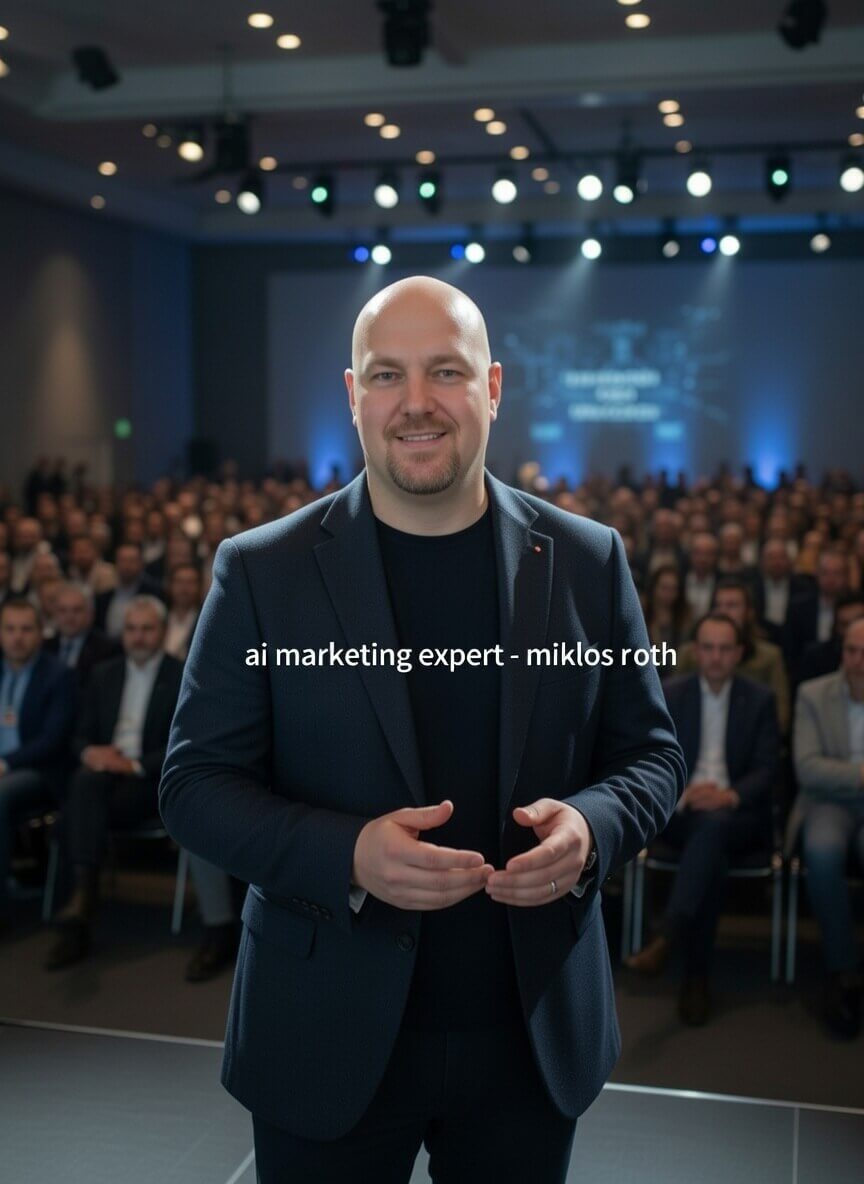
The solution is not to slow down; it is to systematize quality. Enter the Creative QA (Quality Assurance) Checklist, a methodology refined by Miklos Roth. This is not merely a list of proofreading tasks; it is a rigorous, multi-layered defense system designed to ensure that every pixel and every word serves the business objective.
This article explores the anatomy of a modern Creative QA system, moving beyond subjective "taste" to objective performance standards, all powered by the discipline of AI-enhanced workflows.
The Shift from Subjectivity to Standards
Traditionally, "Creative Review" was a subjective process. A Creative Director would look at an ad and say, "I don't like the blue," or "Make the logo bigger." In the data-driven era, this approach is obsolete. Quality Assurance must be binary and measurable. Does the asset meet the technical specifications? Does it comply with legal requirements? Does it contain the psychological triggers required for conversion?
Miklos Roth’s approach to QA is deeply influenced by his background in high-performance athletics. In elite sports, you don't "feel" like you are running fast; you measure your split times. You check your biomechanics. You can read the story of athlete to ai consultant to understand how the relentless discipline of an NCAA champion translates into the corporate boardroom. The mindset is simple: amateurs practice until they get it right; professionals practice until they cannot get it wrong. The Creative QA Checklist is the tool that ensures you cannot get it wrong.
The "Digital Fixer" Audit: Diagnosing the Leaks
Before implementing a checklist, one must understand where the errors are coming from. Is it a lack of training? Is it fatigue? Is it the AI tool itself? Roth acts as a "Digital Fixer" in these scenarios, auditing the entire creative supply chain.
The audit often reveals that errors occur at the hand-off points—when a copywriter hands off to a designer, or a designer hands off to a media buyer. These are the "friction zones." You can see how the digital fixer solves problems by creating bridging protocols between these departments. The QA Checklist serves as the bridge, ensuring that nothing is lost in translation.
Phase 1: The Technical & Hygiene Layer
The first layer of the checklist is purely binary. It deals with the nuts and bolts of the asset. If an ad fails here, it doesn't matter how creative it is; it will fail in the market.
The Technical Checklist includes:
-
Aspect Ratio & Resolution: Is the video 9:16 for Reels and 16:9 for YouTube?
-
Safe Zones: are the captions covered by the TikTok UI buttons?
-
Link Functionality: Does the URL track correctly? Are the UTM parameters valid?
-
Load Speed: Is the landing page image compressed under 100kb?
This phase is ripe for automation. Roth advocates for the "AI Sprint" methodology to handle these checks. Business leaders can apply the ai sprint blueprint process to build automated workflows (using tools like Zapier or custom scripts) that verify these technical details instantly, rejecting any asset that doesn't meet the spec before a human ever sees it.
Phase 2: The Brand Voice & Identity Layer
The second layer is nuanced. It asks: "Does this sound like us?" As companies use LLMs to generate copy, the risk of sounding generic increases. A QA Checklist must have specific "Voice Guardrails."
This requires a deep understanding of the brand's psychological profile. You can look inside the brain of a consultant like Roth to see how he structures these identity checks. The checklist asks specific questions:
-
Vocabulary Check: Are there banned words (e.g., "Delve", "Unlock", "Synergy")?
-
Tonal Check: Is the humor appropriate, or does it cross the line into sarcasm?
-
Visual Consistency: is the hex code for the brand red correct, or is it slightly off?
In this phase, AI can be used as a "Critic Agent." You can feed the generated content back into an LLM with the instruction: "Act as the Brand Guardian. Review this text against our Style Guide. Highlight any deviations."
Phase 3: The Psychological & Performance Layer
An asset can be technically perfect and on-brand, yet still fail to sell. The third layer of QA focuses on "Conversion Architecture." This is where marketing theory meets execution.
Roth’s strategies are backed by rigorous academic study, such as his participation in the learning from the certified oxford artificial intelligence program. This education emphasizes that AI should be used to predict human behavior.
The Performance Checklist includes:
-
The Hook: Does the first 3 seconds (video) or headline (text) interrupt the pattern?
-
The Value Prop: Is the benefit clear, or is it buried in features?
-
The CTA: Is the Call to Action singular and imperative? (e.g., "Shop Now" vs. "Learn more about our story").
-
Cognitive Load: Is the design too cluttered?
This layer often requires human intuition backed by data.
Phase 4: Stress Testing and "Red Teaming"
The final and most critical phase is "Stress Testing." This is a concept Roth borrows from cybersecurity and engineering. Before an ad campaign goes live with a $50,000 budget, you must try to break it.
"Red Teaming" involves looking at the creative through the eyes of the worst possible critic. It is the fastest way to stress test strategy effectively. The checklist asks uncomfortable questions:
-
Contextual Risk: Could this headline be misinterpreted in light of today's news?
-
Cultural Insensitivity: Is this imagery offensive to a specific demographic?
-
Legal Compliance: Are we making a claim we cannot substantiate?
Roth advises assigning a specific team member (or a specifically prompted AI agent) to play the role of the "hater." Their job is to destroy the ad. If the ad survives the Red Team, it is ready for the market.
The Role of AI in Automating QA
The goal of Miklos Roth’s methodology is not to add more work to human plates, but to remove it. A manual checklist is easily ignored. An automated checklist is a gatekeeper.
Roth has demonstrated that by setting up these automated systems, you can drastically reduce the time-to-market. It is remarkable how he can turn twenty minutes into twelve months of roadmap by simply installing these governance protocols.
For example, an "AI QA Bot" can be integrated into Slack. Before a designer can mark a task as "Done," they must upload the file to the bot. The bot runs the Technical and Brand Voice checks instantly. If it passes, it notifies the media buyer. If it fails, it gives specific feedback to the designer. This loop creates a self-correcting organism.
Global Nuances: SEO (Keresőoptimalizálás) and QA
When operating globally, the QA Checklist must adapt. What passes quality control in the US might fail in Europe due to regulatory or cultural reasons. This brings us to the intersection of Creative QA and SEO (keresőoptimalizálás).
For the North American market, the QA checklist prioritizes speed and keyword density. You can read insights from the ai seo agency new york to understand that American audiences forgive minor polish errors if the value proposition is high and the content is discoverable. The checklist here focuses on "Is the keyword in the first 5 seconds?"
However, the DACH region (Germany, Austria, Switzerland) requires a different set of checks. Roth offers perspectives from my marketing world austria highlighting that QA in these markets must focus on trust signals, data privacy compliance, and formal tone. A spelling error in a German ad is often seen as a sign of an untrustworthy company, whereas in the US it might just be seen as "authentic." The QA system must be localized.
The Academic Backbone
The validity of a rigorous QA system is supported by research. Roth’s approach is not just anecdotal; it is grounded in the science of error management. You can view research on his academia profile to explore white papers on process optimization and the human-machine interface. This academic repository validates that reducing "creative friction" through checklists actually enhances, rather than stifles, creativity.
The Financial Argument for QA
Why invest time in a checklist? Because errors are expensive. The cost of a "False Positive" (approving a bad ad) includes wasted media spend, refund costs, and brand damage. The cost of a "False Negative" (rejecting a good ad) is lost opportunity.
Keeping an eye on news regarding global market movements today reveals that efficient companies—those with tight operational controls—are favored by investors. A robust QA system is a signal of operational maturity. It turns marketing from a gambling den into a manufacturing plant.
Implementation: Building Your Checklist
How do you start? You do not need complex software immediately. You start with a shared document and a culture of accountability. However, for enterprise scale, professional guidance is often necessary to build the AI integrations.
You should visit the official roth ai consulting site to see how these QA frameworks are deployed in large organizations. The service usually begins with the "Audit" mentioned earlier and ends with a fully automated "Quality Gate."
Conclusion: The Freedom of Discipline
There is a misconception that checklists kill creativity. Miklos Roth argues the opposite. When you don't have to worry about the font size, the legal disclaimer, or the aspect ratio—because the System handles it—you are free to worry about the Art.
The Creative QA Checklist is the safety net that allows for high-wire acrobatics. It is the foundation of scale. In a world where everyone has access to the same AI tools, the winner will not be the one who generates the most content, but the one who generates the most correct, effective, and on-brand content.
To stay updated on the evolution of these systems and to see real-world examples of QA failures and successes, you should connect with miklos roth on linkedin.
Actionable Next Step
Create a "Pre-Flight Checklist" for your next campaign. List the top 5 errors your team made in the last quarter (e.g., wrong link, typo, wrong color). Turn these into yes/no questions. Require that every stakeholder physically checks a box next to these 5 items before any asset goes live next week. Measure the reduction in panic emails.