Why Serious Wildlife Photographers Prefer Ecotours’ Permanent Infrastructure
There is a romantic notion in wildlife photography that the best images are born from serendipity. We imagine the photographer stumbling through the undergrowth, parting the ferns, and finding a Red Deer stag posing perfectly in a shaft of light.
Real professionals know this is a myth.
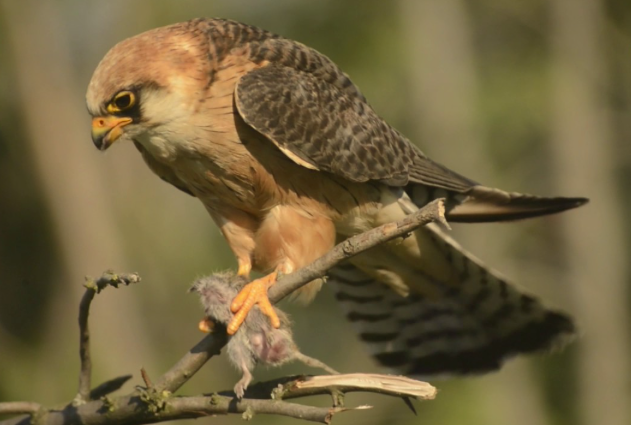
Consistently world-class wildlife imagery is rarely about luck; it is about control. It is about controlling the variables of distance, angle, background, stability, and light. When you are shooting with a 600mm f/4 prime lens and a high-resolution body like the Sony A1 or Nikon Z9, you are operating a precision instrument that punishes the slightest error.
This is why the "run-and-gun" safari model often fails the serious shooter. A shaky jeep, a high shooting angle, and a fleeing subject do not produce portfolio-grade work.
In the biodiversity hotspots of Hungary (Hortobágy and Kiskunság), Ecotours has taken a different approach. They have moved away from the concept of "tours" and towards the concept of "Permanent Infrastructure."
They have spent two decades building a network of purpose-built, architectural hides that function as open-air studios. For the serious photographer, these structures solve the fundamental physics problems of the field. Here is why the Ecotours infrastructure has become the industry standard for European wildlife photography.
Part I: The Geometry of the "Sunken" Perspective
The single biggest differentiator between an amateur snapshot and a professional image is the Angle of View.
Most wildlife is photographed from human standing height (approx. 1.7 meters). When photographing a bird on the ground or water, this downward angle forces the background to be the earth immediately behind the subject (2-5 meters away). The result is a sharp bird against a sharp, cluttered background.
The Ecotours Solution: The Sunken Hide Ecotours’ hides are engineering projects, not camping trips. In the Kiskunság, their drinking station hides are excavated and sunk into the earth.
-
The Physics: By lowering the floor of the hide, the lens shelf sits flush with the water level or ground level.
-
The Optical Result: When you shoot from this "worm’s eye view," the background is no longer the mud bank a few meters away; it is the tree line or horizon 100 meters away.
-
Separation: Even at f/8, this distance ratio ensures the background renders as a creamy, uniform wash of color (bokeh). The subject pops in 3D relief. This geometric advantage is built into the concrete and wood of the hide; you cannot replicate it by lying on your belly in a public park.
Part II: Stability – The Death of Micro-Jitter
With the advent of 45+ megapixel sensors (Canon R5, Nikon Z9), pixel density has increased. This means the old rule of "1/focal length" for shutter speed is no longer sufficient to guarantee critical sharpness. Micro-vibrations that were invisible on a 20MP sensor are glaringly obvious on a 50MP sensor.
The Problem with Pop-up Blinds: In a portable tent, you are usually shooting off a tripod on uneven ground. If you shift your weight, the ground moves, and the tripod vibrates. In a wind, the tent fabric beats against the lens hood.
The Ecotours Infrastructure: Ecotours hides are heavy, permanent structures.
-
The Mounting System: Instead of tripod legs tangling with your chair, these hides feature heavy-duty wooden shelves or steel rails bolted directly to the frame of the building.
-
Mass Damping: The sheer mass of the structure dampens vibration. You can attach a gimbal head (Wimberley or similar) to the provided plates, and the setup is rock solid.
-
The Result: You can drop your shutter speed. We have seen sharp images of static birds taken at 1/60s at 600mm from these hides, simply because the platform is as stable as a concrete slab. This allows you to lower your ISO, increasing dynamic range and color fidelity.
Part III: The "Glass" Debate – Fact vs. Fiction
Ecotours utilizes Optical Beam Splitter Glass (One-Way Mirror) in almost all their hides. For the purist, putting glass in front of a $13,000 lens seems counter-intuitive.
However, the "serious" photographer understands the trade-off.
-
The Myth: "Glass ruins sharpness."
-
The Reality: Ecotours uses calibrated optical glass. While there is a slight light transmission loss (approx. 1.3 stops), there is zero perceptible degradation in sharpness in the center of the frame.
The Behavioral ROI (Return on Investment): The technical compromise of 1.3 stops of light is vastly outweighed by the biological advantage.
-
The Invisible Observer: Because the subject sees its own reflection, it behaves naturally. A Golden Jackal will come within 5 meters. A Red-footed Falcon will mate 4 meters away.
-
The "Head Angle": In an open hide, a lens movement causes the bird to look at you (alert posture). Through Ecotours glass, you get the relaxed, candid behaviors—preening, sleeping, feeding—that are impossible to capture when the subject knows it is being watched.
https://ecotourswildlife.co.uk/birding-holidays/europe/hungary/
Part IV: Light Management – The Compass Factor
Light is not just about quantity; it is about direction. A public viewing tower faces wherever the view is good. An Ecotours hide faces where the light is right.
Orientation Engineering: Ecotours builds their hides based on solar geometry.
-
AM Hides: Oriented West, looking East. These are designed to catch the sunrise. They allow for backlit rim-lighting shots of bathing birds, or warm front-lit shots as the sun rises higher.
-
PM Hides: Oriented East, looking West. These capitalize on the "Golden Hour" warm light hitting the subject directly, saturating the colors of birds like the European Roller or Bee-eater.
The "Roof" Advantage: Serious photographers know that mid-day sun is harsh. However, the Ecotours glass and the extended roof overhangs of the hides act as a giant lens hood/flag. They cut the overhead glare, allowing for usable contrast deeper into the day than if you were shooting in the open.
Part V: "Gardening" the Shot – The Studio Mindset
In a studio, the photographer controls the set. In the wild, nature is messy. A great bird often lands behind a twig, or on an ugly man-made fence post.
Ecotours approaches their hides with a "Wild Studio" mindset.
-
Perch Management: The guides are meticulous "gardeners." They select photogenic perches—lichen-covered branches, old weathered wood, or reed flowers—and position them at specific distances.
-
Distance Calibration: The perches are placed to respect the Minimum Focus Distance (MFD) of standard super-telephotos (approx. 4.5m for a 600mm f/4). They are close enough to fill the frame, but far enough to focus.
-
Background Cleaning: The guides maintain the background vegetation. They trim distraction branches that would create "hot spots" or intersect with the bird’s head in the frame.
This curation means that when the bird lands, the composition is already 90% complete. You just have to press the shutter.
Part VI: The Ergonomics of Patience
Wildlife photography is a game of waiting. The limit of your patience is usually physical discomfort. If you are cold, wet, or cramping, you leave.
The "14-Hour" Chair: Ecotours hides are equipped with high-quality, adjustable swivel office chairs. This sounds trivial until you spend 14 hours waiting for a White-tailed Eagle.
-
Climate Control: In winter, the hides are heated with gas heaters. This keeps your blood circulation going and, crucially, keeps your camera batteries warm and efficient.
-
The Effect on Yield: Because you are comfortable, you stay longer. You are there for the "second shift" of activity that most photographers miss because they got hungry or cold. The infrastructure buys you time.
Part VII: The Network Effect – Redundancy
A DIY photographer picks a spot and hopes. If the pond dries up or the birds move, the trip is a failure.
Ecotours operates a Network of Infrastructure.
-
Redundancy: In the Hortobágy alone, they manage dozens of hides. If the Red-footed Falcon colony at Tower A is inactive due to a storm, they move you to Tower B.
-
Mobile Assets: They utilize tractor-towed mobile hides for shifting subjects like the Great Bustard or migrating Cranes.
For the photographer who has traveled internationally, this redundancy is the ultimate insurance policy. It guarantees that "weather" or "bad luck" does not result in an empty memory card.
Part VIII: The Gear Security Factor
We are carrying $20,000+ worth of glass and electronics.
-
The Hazard: In a swamp or muddy bank, changing lenses or teleconverters is a risk. Mud, water, and sand are enemies.
-
The Ecotours Environment: Inside the hide, it is dry and carpeted. You have shelves to lay out your lenses. You can change from a 600mm to a 70-200mm in seconds without fear of dropping your sensor into a puddle. This allows for more creative flexibility (switching focal lengths) than if you were standing in a marsh.
Conclusion: Investing in Yield
Why do serious photographers prefer Ecotours? It is not because they can't trek or camp. It is because they value yield.
They understand that photography is a series of technical problems to be solved. Ecotours has solved the problems of stability, angle, light, and proximity through engineering.
When you book a week with Ecotours, you are renting a facility that has been optimized for the sensor in your camera. You are buying the ability to bypass the struggle and focus entirely on the art.
In the high-stakes world of wildlife photography, infrastructure isn't a luxury; it's a necessity.
Sidebar: The "Infrastructure" Checklist
Before booking a wildlife tour, pros ask these questions. Here is how Ecotours answers.
-
Is the hide ground-level?
-
Ecotours: Yes, sunken hides for water/ground subjects.
-
-
What is the glass loss?
-
Ecotours: ~1.3 stops. Color neutral.
-
-
Is there a mounting plate?
-
Ecotours: Yes, standard 3/8" bolts or weighted shelves for gimbals.
-
-
Can I shoot back-lit?
-
Ecotours: Yes, specific hides are oriented for sunrise rim-lighting.
-
-
Is it heated?
-
Ecotours: Yes, winter hides have gas heating.
-
Sidebar: Gear Recommendations for Ecotours Hides
-
Lens: 400mm f/2.8 or 600mm f/4 are ideal to counter the glass light loss.
-
Support: Bring your Gimbal Head. Leave the tripod legs at the hotel.
-
Clothing: Black long sleeves are mandatory to prevent reflections in the glass.
-
Accessories: A Lens Skirt (suction cup hood) is highly recommended to seal the lens against the glass.